2026 Superbike Aerodynamics: Winglets, Ground Effects & Carbon Monocoques
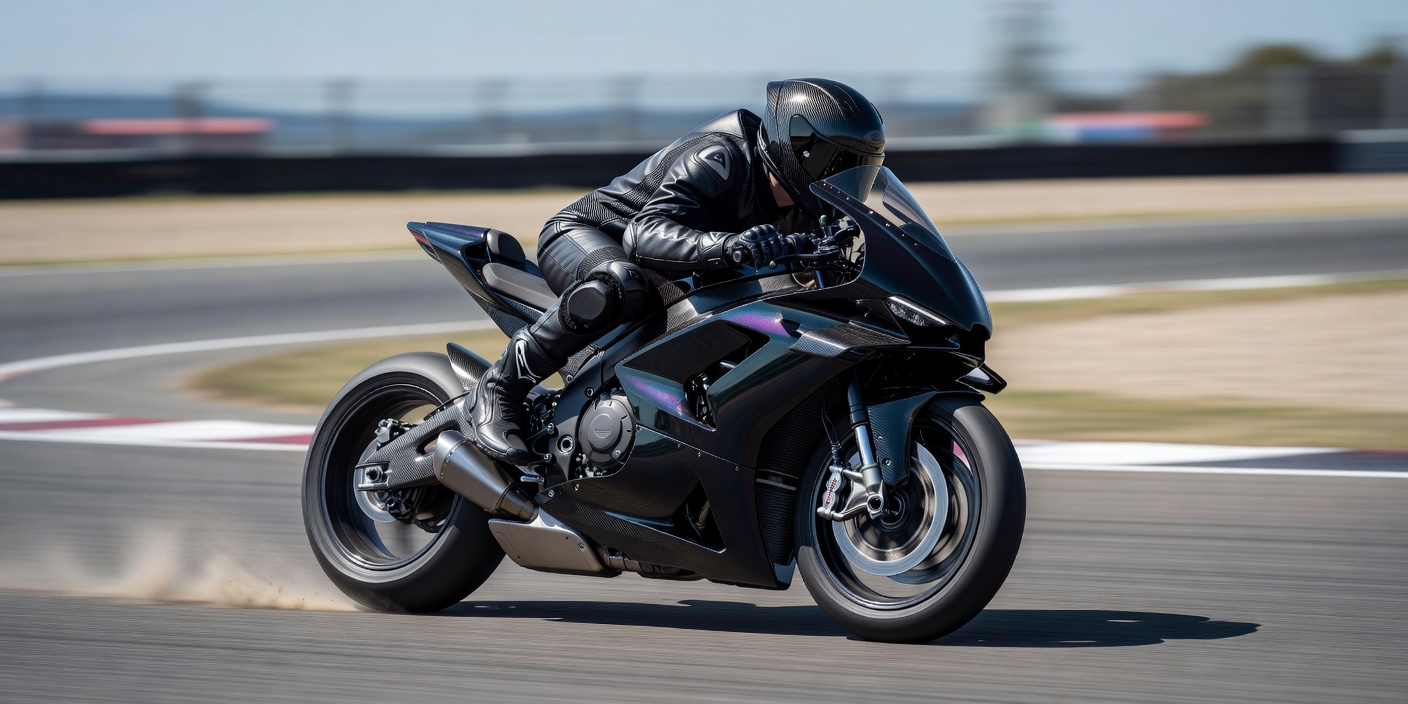
At speeds exceeding 300 km/h (186 mph), aerodynamics cease to be a secondary consideration and become the primary dictating factor of lap times. The 2026 flagship superbikes—such as Ducati’s Panigale V4 R, BMW’s M 1000 RR, and Aprilia’s RSV4 Factory—utilize carbon fiber winglet appendages derived directly from MotoGP wind tunnel testing.
1. Vertical Downforce vs. Drag Trade-offs
The primary function of front fairing winglets is not high-speed cornering stability, but rather front-wheel retention during acceleration out of slow corners. By applying up to 30 kg (66 lbs) of downforce onto the front tire at 270 km/h, motorcycle engineers can limit anti-wheelie electronics intervention, allowing full engine torque to reach the rear wheel uninterrupted.
2. Cornering Downforce at 60-Degree Lean Angles
Designing aerodynamic components for two-wheeled vehicles poses a unique mathematical challenge: unlike Formula 1 cars that remain flat during cornering, superbikes roll to extreme lean angles. Modern winglets feature stacked bi-plane profiles angled precisely to generate downforce relative to the ground plane even when the motorcycle is inclined at 60 degrees.
3. Ground Effect Ducting & Fairing Pressure Seals
The latest breakthrough in 2026 production motorcycles involves lower fairing scoops that create a ground-effect low-pressure zone beneath the motorcycle when leaned over, effectively pulling the chassis down toward the tarmac and increasing mechanical grip without adding physical weight.
Want to submit your track build for editorial review? Contact our engineering team →