The Art of the Modern Cafe Racer: Stripping Down to Raw Steel & High-Bhp
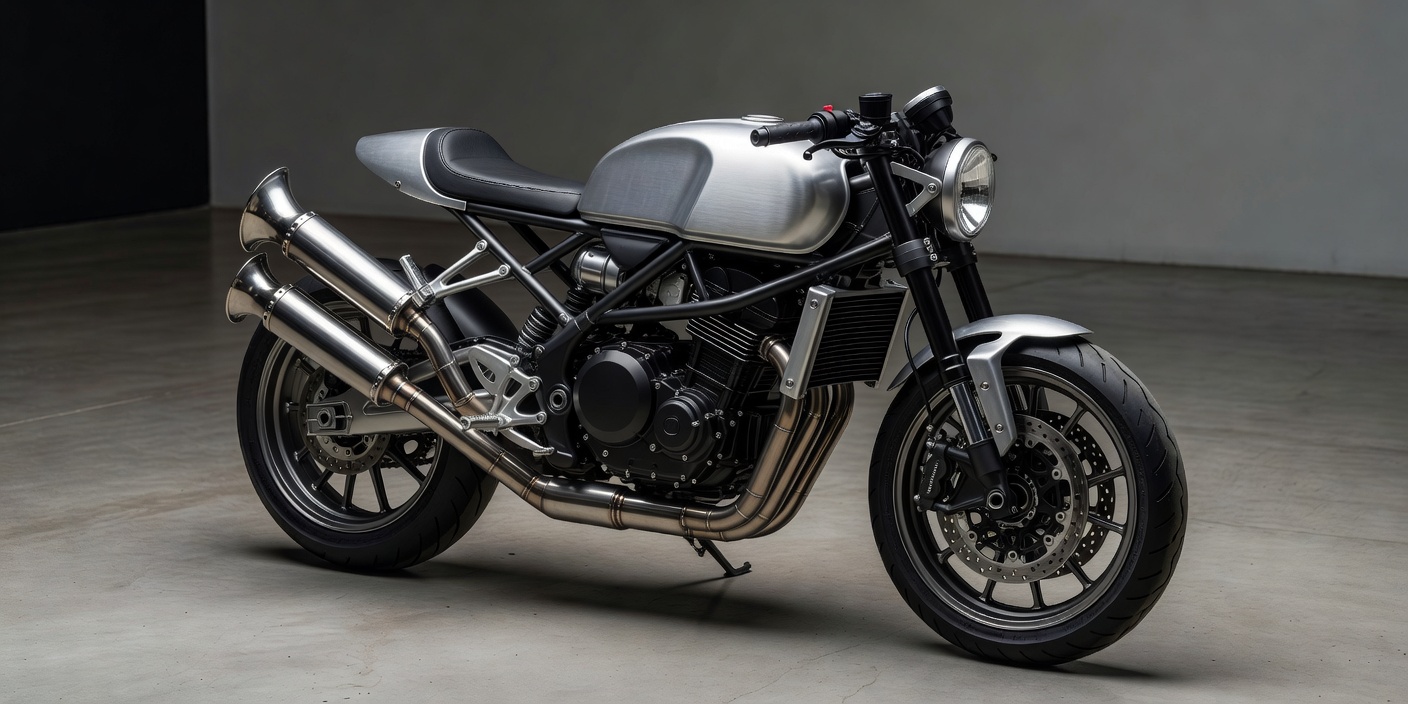
The subculture that originated outside the Ace Cafe in London during the early 1960s has evolved from lightweight street racers into a highly sophisticated masterclass of automotive engineering. Today's modern cafe racer build is no longer just about taking off unnecessary fairings—it is an intricate balance of high-revving power plants, CAD-designed aluminum chassis geometry, and titanium clip-on control systems.
1. Geometry & Riding Position
Traditional cafe racers prioritized low drag above all else. Builders achieved this by fitting aggressively low clip-on handlebars, rear-set footpegs, and elongated fuel tanks that forced the rider into an aggressive, aerodynamic crouch over the gas tank.
Modern builders utilize inverted front forks from modern donor superbikes—such as Öhlins FGRT 43mm units—paired with custom billet aluminum triple clamps designed to maintain optimal trail metrics while giving the front end an ultra-clean chrome-black appearance.
2. Blueprinting the Engine & Exhaust Dynamics
Engine swaps are increasingly common in the modern scene. Rather than relying on aging 1970s air-cooled parallel twins, current customizers frequently select liquid-cooled modern donors:
- Triumph Thruxton 1200 RS: High-torque 1200cc parallel-twin producing 104 hp with lightweight crank upgrades.
- Honda CB750 Four Original Engine: Restored with modern forged pistons, electronic ignition, and modern Keihin FCR flat-slide carburetors.
- BMW R NineT Boxer: Air/oil-cooled 1170cc engine offering asymmetric horizontal layout aesthetics with modern ABS and traction control integration.
| Specification Metric | Vintage 1960s Spec | 2026 Modern Apex Spec |
|---|---|---|
| Dry Weight | 185 kg (407 lbs) | 145 kg (319 lbs) |
| Horsepower Output | 45 - 55 BHP | 135 - 180 BHP |
| Braking Hardware | Single Front Drum Brake | Brembo Stylema Monobloc 320mm Twin Discs |
| Frame Material | Tubular Mild Steel | TIG-Welded Chromoly / Carbon Subframe |
3. Minimalism via Modern Electronics
The hallmark of an exceptional contemporary cafe build is complete electrical invisibility. Modern CAN-bus controllers like the Motogadget m.unit allow builders to run tiny pushbutton controls on the handlebars while routing the entire electrical harness inside the hollow frame tubes.
Combined with lightweight lithium-iron-phosphate (LiFePO4) batteries tucked underneath custom rear seat cowls, the frame triangle remains entirely open, creating that iconic floating aesthetic.
Explore our full step-by-step garage journal on building custom subframes →